Covid cases keep rising in India. Therefore I am sharing the broad contours of how doctors are managing Covid. If you are in the unfortunate situation of having a loved one who is fighting Covid, this might help you.
There is no treatment (cure) for Covid-19. It can only be managed. The most common symptoms of the onset of Covid are high fever, dry cough and fatigue. If you are sick, it is best to get an rRT-PCR test so you know within 12 hours what's going on with you. This reduces anxiety levels, if all you have is a sore throat from common cold / flu.
Your doctor will begin Covid treatment with Paracetamol (tab Dolo 650mg), usually a max of three a day to be given every time fever crosses 100°F. They'll give you Montair LC to help with your cough. Doxycylin 100mg, an antibiotic, is given to handle any secondary infections. Zincovit and Vitamin C are pretty standard. Blood clotting is a major problem with Covid, so you could get aspirin (Ecosprin). Other than this, you might get a bunch of medicines to handle acidity, diarrhoea, etc.
Your doctor will want you well fed, well hydrated, well rested. They will want a chart of your temperature and SpO₂ measured every two hours. Turn that phone off. Do not Google for answers. Do not talk to ten friends on WhatsApp who ask you anxiety inducing questions. Indulge in positive affirmation, read a funny book, and keep your mind empty. Unless you're 70 years+ with high BP, diabetes, lung or heart issues, your chances of dying are very very low if you follow your doctor's advice and only your doctor's advice.
There is a one in five chance that your oxygen saturation will fall below 94, or you will face respiratory distress (fast breathing). You will then be hospitalised. On admission they will administer you oxygen, and send your SpO₂ soaring to 96. They will also administer you dexamethasone through IV/injection. Depending on how long and how severe your respiratory distress was, the combination of Oxygen and Dexa will put you in Covid heaven. You will feel good, and you will believe that you will heal. Hold that positive thought in your mind for the next few days.
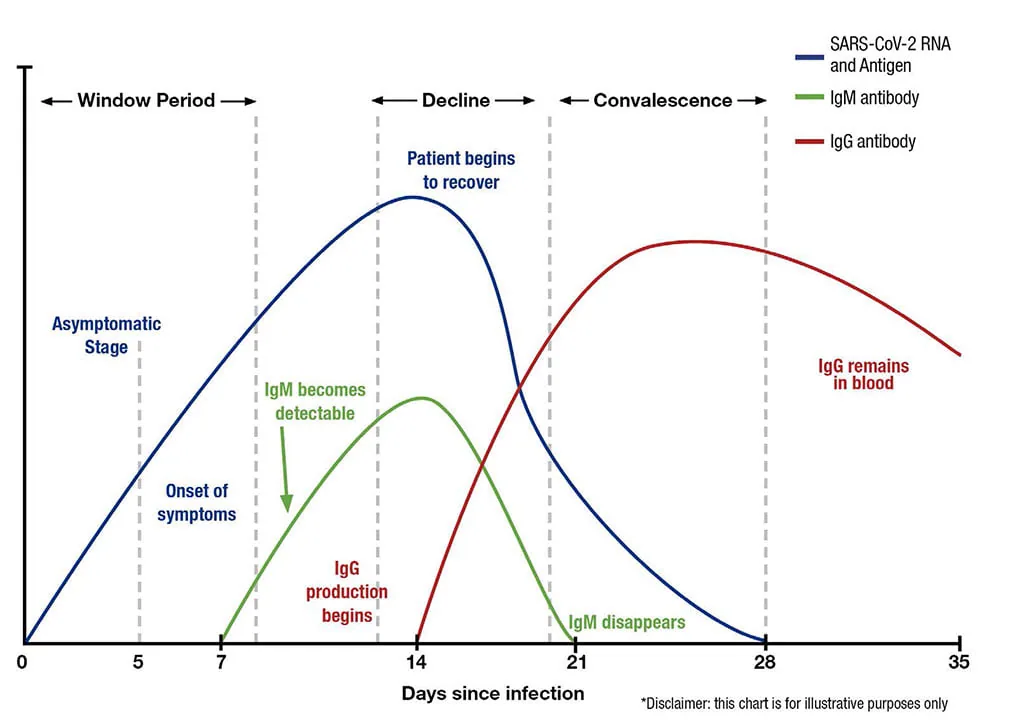
Dexa is the only WHO recognised drug for Covid management. To understand how it works, let us first understand how Covid is healed. A few (about 5) days after contracting Covid from someone, you will start seeing symptoms. Two days into these symptoms, your body starts manufacturing IgM antibodies. Nine days from onset of symptoms, your immune systems starts making IgG antibodies. IgM are generic for all infections; IgG are designed by your body to attack and kill Covid.
The only substance on Earth that cures Covid is the IgG antibodies that your body produces. You could borrow someone else's IgGs using plasma transfusion, but you will still need your own body making IgG to completely finish off Covid. Dexa is a steroid† that calms your immune system. This reduces inflammation in your lungs, which are the battleground between the Covid virus and your IgMs. Human cells replicate by splitting into two. Covid replicates by taking your lung cells and injecting its own RNA into them, thus converting them into Covid cells. Covid is literally eating away at your lungs. By reducing lung inflammation and giving you oxygen, doctors help you breathe better.
(Edit: I've attached a graph. I am counting days from the day you first get fever; this is shown as day 5 in the graph. Adjust X-axis accordingly when referring to the graph.)
You start defeating Covid from the ninth day onwards. So Covid management is just one long wait for the IgGs to kick Covid's ass (while hoping that your lungs or heart don't collapse before you kill Covid). At about the 14th day from symptom onset (first day of fever), your doctor will ask you to get an rRT-PCR test done. If you test negative, hurray. If you don't test negative, they will just try again in a couple of days. Very rarely will you not test negative. (IgG is amazing stuff; if only you and I had paid any attention in bio class and actually understood what IgGs are).
What might happen, if you are hospitalised, is that in spite of Dexa and Oxygen, your lungs are unable to keep up. Doctors will then put you on a BiPAP machine. This lunch box sized machine helps set the pace of your lungs. It makes sure your lungs are always breathing, whether you are asleep or awake. It ensures every breath has a certain minimum amount of air going in. When you breathe in, the pressure is high, when you breathe out, the pressure is lower (but not negative, that is, below atmospheric pressure). The BiPAP keeps your lungs primed, preventing them from collapsing, giving up, or even slowing down.
During hospitalisation you also get regular blood tests, which tell doctors how much infection is inside of you, and that your blood isn't clotting somewhere. You get regular X-rays of your chest, and perhaps some CTs, to see how much pneumonia you have. Pneumonia is simply the correct medical term for the situation that Covid creates in your lungs. Your heart may be monitored using an echocardiogram - because a bad case of Covid spreads from your lungs to your heart and then to your brain.
This is as far as I know. If things get worse and a patient is intubated and put on ventilator (a washing machine sized equipment), just know that death rates are low even for such patients.
Hydroxychloroquine, Ivermectin, Remdesivir - clinical studies have discredited these drugs. Depending on your state and country, you might still be given these medicines. I was given HCQ - what is colloquially called कुनैन - and this left me bitter for many days after. By the time I was discharged, ICMR had removed HCQ from their Covid Management Protocol.
If you have further questions, best to connect with me on WhatsApp. Or, better still, ask a real doctor.
(Disclaimer: I am not a doctor. This is not medical advice. If you are getting your medical advice from the Internet, you are in deep trouble.)
There is no treatment (cure) for Covid-19. It can only be managed. The most common symptoms of the onset of Covid are high fever, dry cough and fatigue. If you are sick, it is best to get an rRT-PCR test so you know within 12 hours what's going on with you. This reduces anxiety levels, if all you have is a sore throat from common cold / flu.
Your doctor will begin Covid treatment with Paracetamol (tab Dolo 650mg), usually a max of three a day to be given every time fever crosses 100°F. They'll give you Montair LC to help with your cough. Doxycylin 100mg, an antibiotic, is given to handle any secondary infections. Zincovit and Vitamin C are pretty standard. Blood clotting is a major problem with Covid, so you could get aspirin (Ecosprin). Other than this, you might get a bunch of medicines to handle acidity, diarrhoea, etc.
Your doctor will want you well fed, well hydrated, well rested. They will want a chart of your temperature and SpO₂ measured every two hours. Turn that phone off. Do not Google for answers. Do not talk to ten friends on WhatsApp who ask you anxiety inducing questions. Indulge in positive affirmation, read a funny book, and keep your mind empty. Unless you're 70 years+ with high BP, diabetes, lung or heart issues, your chances of dying are very very low if you follow your doctor's advice and only your doctor's advice.
There is a one in five chance that your oxygen saturation will fall below 94, or you will face respiratory distress (fast breathing). You will then be hospitalised. On admission they will administer you oxygen, and send your SpO₂ soaring to 96. They will also administer you dexamethasone through IV/injection. Depending on how long and how severe your respiratory distress was, the combination of Oxygen and Dexa will put you in Covid heaven. You will feel good, and you will believe that you will heal. Hold that positive thought in your mind for the next few days.
Dexa is the only WHO recognised drug for Covid management. To understand how it works, let us first understand how Covid is healed. A few (about 5) days after contracting Covid from someone, you will start seeing symptoms. Two days into these symptoms, your body starts manufacturing IgM antibodies. Nine days from onset of symptoms, your immune systems starts making IgG antibodies. IgM are generic for all infections; IgG are designed by your body to attack and kill Covid.
The only substance on Earth that cures Covid is the IgG antibodies that your body produces. You could borrow someone else's IgGs using plasma transfusion, but you will still need your own body making IgG to completely finish off Covid. Dexa is a steroid† that calms your immune system. This reduces inflammation in your lungs, which are the battleground between the Covid virus and your IgMs. Human cells replicate by splitting into two. Covid replicates by taking your lung cells and injecting its own RNA into them, thus converting them into Covid cells. Covid is literally eating away at your lungs. By reducing lung inflammation and giving you oxygen, doctors help you breathe better.
(Edit: I've attached a graph. I am counting days from the day you first get fever; this is shown as day 5 in the graph. Adjust X-axis accordingly when referring to the graph.)
You start defeating Covid from the ninth day onwards. So Covid management is just one long wait for the IgGs to kick Covid's ass (while hoping that your lungs or heart don't collapse before you kill Covid). At about the 14th day from symptom onset (first day of fever), your doctor will ask you to get an rRT-PCR test done. If you test negative, hurray. If you don't test negative, they will just try again in a couple of days. Very rarely will you not test negative. (IgG is amazing stuff; if only you and I had paid any attention in bio class and actually understood what IgGs are).
What might happen, if you are hospitalised, is that in spite of Dexa and Oxygen, your lungs are unable to keep up. Doctors will then put you on a BiPAP machine. This lunch box sized machine helps set the pace of your lungs. It makes sure your lungs are always breathing, whether you are asleep or awake. It ensures every breath has a certain minimum amount of air going in. When you breathe in, the pressure is high, when you breathe out, the pressure is lower (but not negative, that is, below atmospheric pressure). The BiPAP keeps your lungs primed, preventing them from collapsing, giving up, or even slowing down.
During hospitalisation you also get regular blood tests, which tell doctors how much infection is inside of you, and that your blood isn't clotting somewhere. You get regular X-rays of your chest, and perhaps some CTs, to see how much pneumonia you have. Pneumonia is simply the correct medical term for the situation that Covid creates in your lungs. Your heart may be monitored using an echocardiogram - because a bad case of Covid spreads from your lungs to your heart and then to your brain.
This is as far as I know. If things get worse and a patient is intubated and put on ventilator (a washing machine sized equipment), just know that death rates are low even for such patients.
Hydroxychloroquine, Ivermectin, Remdesivir - clinical studies have discredited these drugs. Depending on your state and country, you might still be given these medicines. I was given HCQ - what is colloquially called कुनैन - and this left me bitter for many days after. By the time I was discharged, ICMR had removed HCQ from their Covid Management Protocol.
If you have further questions, best to connect with me on WhatsApp. Or, better still, ask a real doctor.
(Disclaimer: I am not a doctor. This is not medical advice. If you are getting your medical advice from the Internet, you are in deep trouble.)